Canned Tuna Market to Witness Premium Seafood Transformation Through Sustainable Sourcing, Convenience Packaging, and Pr
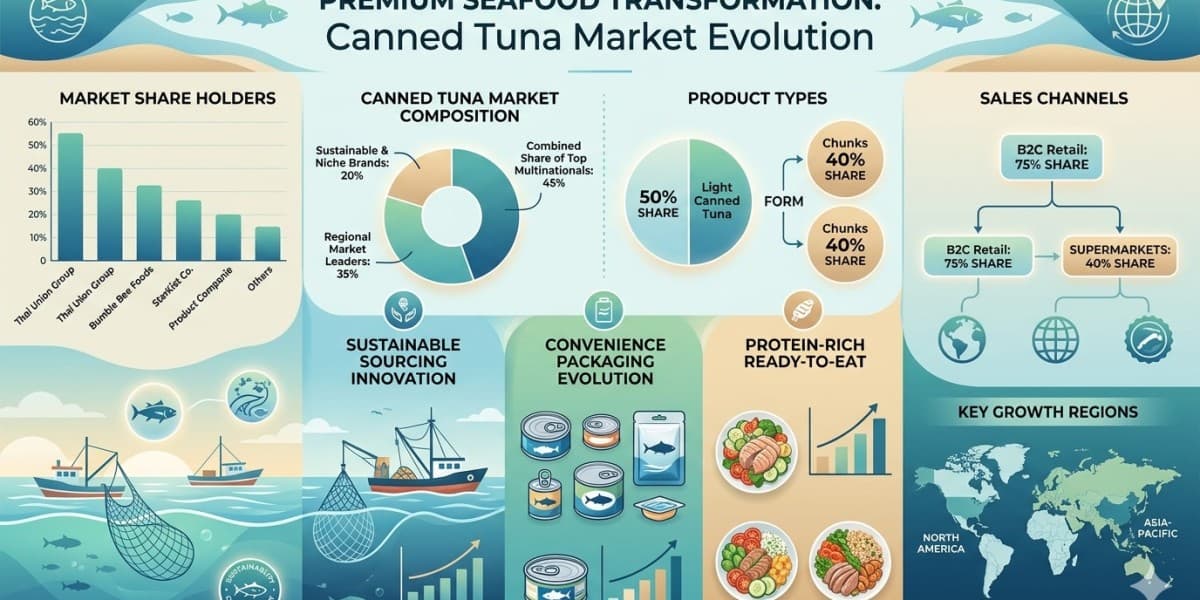
<p>The global canned tuna market is undergoing a major transformation as seafood manufacturers increasingly focus on sustainable sourcing, premium product innovation, and convenience-oriented packaging formats. The industry remains moderately concentrated, with multinational seafood processors, regional brands, and sustainability-focused niche companies competing across retail, foodservice, and online grocery ecosystems.</p><p>International seafood leaders including Thai Union Group, Bumble Bee Foods, and StarKist Co. collectively account for nearly 45% of the global market share, supported by extensive supply chain infrastructure, strong retail penetration, and diversified canned seafood portfolios.</p><p>The canned tuna industry is increasingly transitioning from a traditional shelf-stable protein category into a premiumized convenience-food ecosystem driven by sustainable fishing practices, high-protein wellness positioning, and ready-to-eat meal innovation.</p><p><strong>Quick Stats: Canned Tuna Market</strong></p><ul><li>Leading Global Market Share Holders: Thai Union Group, Bumble Bee Foods, StarKist Co.</li><li>Combined Share of Top Multinationals: 45%</li><li>Regional Market Leaders Share: 35%</li><li>Sustainable & Niche Brands Share: 20%</li><li>Top Five Companies Combined Market Share: ~55%</li><li>Leading Product Segment: Light Canned Tuna – 50% share</li><li>Leading Form Segment: Chunks – 40% share</li><li>Leading Sales Channel: B2C Retail – 75% share</li><li>Largest Retail Channel: Supermarkets – 40% share</li><li>Fastest Growing Trend: Sustainable & Traceable Tuna Products</li><li>Key Growth Regions: North America, Europe, and Asia-Pacific</li></ul><p>The canned tuna market is evolving toward premium seafood positioning supported by clean-label formulations, sustainability certifications, gourmet flavor innovation, and digitally enabled traceability systems.</p><p>Manufacturers are increasingly investing in responsible sourcing programs, BPA-free packaging systems, single-serve meal formats, and high-protein wellness positioning to strengthen consumer trust and category differentiation.</p><p><strong>Market Share Across Seafood & Convenience Food Ecosystem</strong></p><ul><li>Shelf-Stable Seafood Market: ~32–35% share</li><li>Ready-to-Eat Protein Meals Segment: ~12–15% share</li><li>Processed Seafood Industry: ~18–20% share</li><li>Functional Protein Foods Market: ~6–8% share</li><li>Sustainable Seafood Products Segment: ~10–12% share</li></ul><p>These figures highlight canned tuna’s growing strategic importance within convenient nutrition, seafood sustainability, and premium ready-to-eat food ecosystems.</p><p><strong>Key Growth Drivers</strong></p><ul><li>Rising Demand for Convenient Protein Sources: Consumers increasingly prefer ready-to-eat, high-protein meal solutions compatible with busy lifestyles</li><li>Sustainability and Ethical Fishing Adoption: MSC-certified, pole-and-line-caught, and traceable tuna sourcing systems are becoming major purchase drivers</li><li>Premiumization of Seafood Products: Gourmet olive oil-packed, smoked, infused, and flavored tuna products are expanding across premium retail channels</li><li>Expansion of Health & Wellness Positioning: Tuna products are increasingly marketed for omega-3 content, high protein value, and fitness-oriented nutrition benefits</li></ul><p><strong>Product & Packaging Innovation Trends</strong></p><p>The canned tuna market is witnessing rapid innovation across product development and convenience packaging systems:</p><ul><li>Single-serve protein tuna pouches</li><li>Ready-to-eat tuna bowls and snack kits</li><li>BPA-free and recyclable packaging materials</li><li>QR-enabled traceability and blockchain sourcing systems</li></ul><p>Manufacturers are integrating portability, sustainability, and freshness-preservation technologies to strengthen product appeal among health-conscious and environmentally aware consumers.</p><p><strong>Segmental Insights</strong></p><p><strong>Light Canned Tuna Segment</strong></p><p>Light canned tuna continues to dominate the market with approximately 50% revenue share due to affordability, broad consumer acceptance, and widespread meal usage.</p><p>Major manufacturers including Thai Union Group and StarKist Co. maintain strong leadership through mass-market supermarket distribution and foodservice partnerships.</p><p><strong>Chunk Form Segment</strong></p><p>Chunk-style canned tuna accounts for nearly 40% of the market owing to versatility in salads, sandwiches, pasta dishes, and meal preparation applications.</p><p>Convenience, texture consistency, and broad culinary compatibility continue to strengthen consumer preference for chunk-based formats globally.</p><p><strong>B2C Retail Segment</strong></p><p>The B2C channel represents approximately 75% of market demand, with supermarkets emerging as the leading retail format.</p><p>Growing online grocery expansion, subscription seafood services, and direct-to-consumer sales models are further accelerating digital channel growth.</p><p><strong>Sustainability & Traceability Transformation</strong></p><p>The canned tuna industry is increasingly shifting toward fully traceable and environmentally responsible seafood ecosystems as regulators, retailers, and consumers demand improved sourcing transparency.</p><p>Leading seafood companies are investing heavily in:</p><ul><li>Blockchain-enabled seafood traceability</li><li>MSC-certified sustainable fishing operations</li><li>Pole-and-line tuna harvesting systems</li><li>Eco-friendly recyclable packaging solutions</li><li>Reduced-carbon seafood logistics systems</li></ul><p>These initiatives are expected to become essential competitive differentiators across premium seafood categories.</p><p>? Get Access to the Report Sample: <a href="https://www.futuremarketinsights.com/reports/sample/rep-gb-21522">https://www.futuremarketinsights.com/reports/sample/rep-gb-21522</a></p><p><strong>Key Company Initiatives</strong></p><p><strong>Thai Union Group</strong></p><p>Expanded SeaChange® sustainability initiatives focused on achieving 100% responsibly sourced tuna supply systems.</p><p><strong>Bumble Bee Foods</strong></p><p>Introduced high-protein tuna pouches targeting fitness-focused and meal-prep consumers.</p><p><strong>StarKist Co.</strong></p><p>Expanded flavored ready-to-eat tuna bowls designed for convenience-driven consumers and on-the-go meal occasions.</p><p><strong>Chicken of the Sea</strong></p><p>Implemented blockchain-based seafood sourcing verification systems to improve transparency and food safety confidence.</p><p><strong>Dongwon Industries</strong></p><p>Expanded gourmet and Korean-inspired flavored tuna product portfolios across Asian and international markets.</p><p><strong>Wild Planet Foods</strong></p><p>Strengthened organic and pole-and-line-caught tuna offerings targeting sustainability-focused consumers.</p><p><strong>Future Industry Outlook</strong></p><p>The canned tuna market is expected to witness sustained long-term transformation driven by:</p><ul><li>Expansion of premium seafood consumption</li><li>Rising demand for portable protein-rich meals</li><li>Increased adoption of sustainable fishing certifications</li><li>Growth in flavored and gourmet tuna products</li><li>Expansion of direct-to-consumer seafood commerce</li><li>Technological advancements in smart packaging systems</li><li>Stronger regulatory requirements for seafood traceability</li></ul><p>As consumers increasingly prioritize convenience, protein nutrition, ethical sourcing, and environmental responsibility, canned tuna products are expected to evolve into a more premium, technology-enabled, and sustainability-focused seafood category.</p><p><strong>Recommendations for Brands</strong></p><p>Manufacturers are expected to focus heavily on:</p><ul><li>Expanding premium olive oil-packed and gourmet tuna lines</li><li>Investing in eco-friendly and BPA-free packaging technologies</li><li>Strengthening MSC-certified and traceable sourcing systems</li><li>Developing protein-focused wellness product positioning</li><li>Increasing flavored and regionally inspired tuna offerings</li><li>Expanding e-commerce and subscription seafood programs</li><li>Strengthening private-label retail partnerships</li></ul><p>These strategies are expected to support long-term competitiveness within the rapidly evolving global canned seafood ecosystem.</p><p><strong>About the Market</strong></p><p>The canned tuna market represents a strategically important segment within the global processed seafood, ready-to-eat meal, and functional protein food industries. Its growing role in convenience nutrition, sustainable seafood sourcing, and premium shelf-stable meal systems positions it as a key category across modern retail, foodservice, and digital grocery ecosystems.</p><p><strong>About Future Market Insights (FMI)</strong></p><p>Future Market Insights (FMI) is a leading provider of market intelligence and consulting services, serving clients across more than 150 countries. FMI delivers actionable insights across industries including food & beverage, seafood processing, packaging, consumer goods, healthcare, and industrial manufacturing.</p><p>An ESOMAR-certified research organization, FMI provides syndicated research reports and strategic consulting services to Fortune 1000 companies, investors, and emerging enterprises globally.</p><p>See Full Report View: <a href="https://www.futuremarketinsights.com/reports/canned-tuna-market-share-analysis">https://www.futuremarketinsights.com/reports/canned-tuna-market-share-analysis</a></p>