EVF Optical Module Failures: Solving the Eye Strain Crisis
May 12
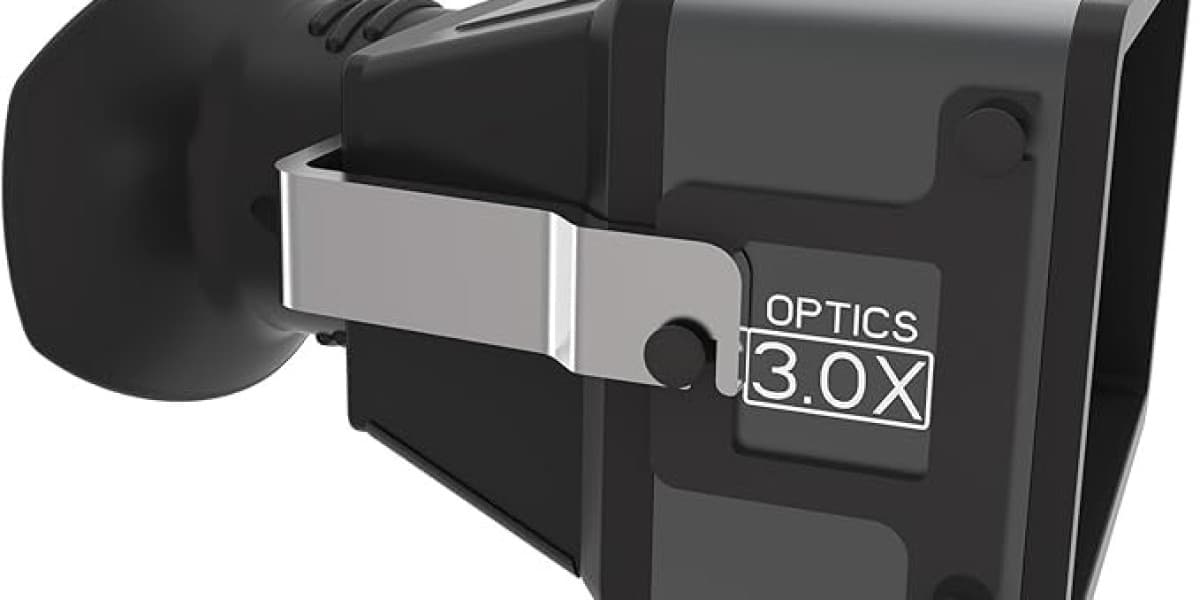
<p data-path-to-node="8">In the professional imaging and tactical display sectors of 2026, the <a href="https://arvroptical.com/product-category/arvr-optical-module/"><strong data-path-to-node="8" data-index-in-node="70">EVF optical module</strong></a> has evolved from a simple camera accessory into a mission-critical component for medical surgery, remote piloting, and thermal targeting. However, as display foundries push the limits of PPI (pixels per inch) with Micro OLED technology, a significant "Clarity Gap" has emerged. Hardware engineers and B2B procurement leads are finding that even the most advanced 4K micro-displays are rendered ineffective if the surrounding optical module cannot handle the magnification without introduced aberrations.</p><p data-path-to-node="9">The core problem for B2B integrators is the "Virtual Image Conflict"—the struggle to provide a large, immersive field of view (FoV) while maintaining a compact form factor and zero-latency performance. This article identifies the primary technical failures in modern EVF modules and provides a feasible, scalable roadmap for professional-grade integration.</p><h3 data-path-to-node="10"><strong data-path-to-node="10" data-index-in-node="0">The Problem: Edge Distortion and Eyebox Restrictions</strong></h3><p data-path-to-node="11">Most high-performance EVF optical modules in current B2B supply chains face two specific technical bottlenecks that lead to user fatigue and product returns:</p><ol start="1" data-path-to-node="12"><li><p data-path-to-node="12,0,0"><strong data-path-to-node="12,0,0" data-index-in-node="0">Peripheral Chromatic Aberration:</strong> To keep modules lightweight, many manufacturers use inferior plastic aspheric lenses. This results in "color fringing" at the edges of the viewfinder. In high-stakes environments—such as a surgeon performing robotic laparoscopy—this lack of edge-to-edge clarity can lead to critical errors in depth perception.</p></li><li><p data-path-to-node="12,1,0"><strong data-path-to-node="12,1,0" data-index-in-node="0">The Rigid Eyebox Limitation:</strong> Traditional EVF designs have a very small "sweet spot." If the user's eye shifts slightly during high-vibration activities (e.g., operating a drone or a tactical vehicle), the image blurs or disappears. For B2B clients, this lack of ergonomic flexibility reduces the "effective uptime" of the device in the field.</p></li></ol><h3 data-path-to-node="13"><strong data-path-to-node="13" data-index-in-node="0">The Solution: A System-Level Optical Strategy</strong></h3><p data-path-to-node="14">Solving these challenges requires moving beyond simple lens-to-screen alignment and toward a "Total Visual Path" optimization strategy.</p><h4 data-path-to-node="15"><strong data-path-to-node="15" data-index-in-node="0">1. Transitioning to Hybrid Glass-Plastic Optics</strong></h4><p data-path-to-node="16">The most feasible solution for chromatic aberration is the implementation of <strong data-path-to-node="16" data-index-in-node="77">Hybrid Optical Stacks</strong>. By combining a high-refractive-index glass element with precision-molded plastic aspheric lenses, engineers can correct for "purple fringing" without significantly increasing the weight of the EVF optical module. For B2B suppliers, offering a "Zero-Aberration" certified module provides the technical assurance that medical and defense contractors require.</p><h4 data-path-to-node="17"><strong data-path-to-node="17" data-index-in-node="0">2. Implementing Large Exit-Pupil Architectures</strong></h4><p data-path-to-node="18">To solve the eyebox restriction, the industry is shifting toward <strong data-path-to-node="18" data-index-in-node="65">Long Eye-Relief and Large Exit-Pupil designs</strong>. By widening the aperture of the final ocular lens, the "sweet spot" is increased by up to 30%. This allows for comfortable viewing even when the user is wearing protective eyewear or operating in unstable environments. A feasible integration path involves utilizing multi-element ocular groups that maintain a 20mm+ eye relief—a key ranking signal for "User Experience" in 2026 B2B procurement.</p><h4 data-path-to-node="19"><strong data-path-to-node="19" data-index-in-node="0">3. Low-Latency Driver IC Synchronization</strong></h4><p data-path-to-node="20">Beyond the glass, the "perceived" clarity of an EVF optical module is tied to latency. In 2026, a feasible solution involves the hardware-level integration of <strong data-path-to-node="20" data-index-in-node="159">Low-Persistence Drive Circuits</strong>. By synchronizing the display's refresh rate with the optical module's thermal compensation sensor, manufacturers can eliminate "motion smear." This ensures that the digital image remains as sharp as a traditional optical viewfinder, which is essential for high-speed tracking applications.</p><p data-path-to-node="23"> </p><h3 data-path-to-node="24"><strong data-path-to-node="24" data-index-in-node="0">The Future of EVF Modules: AI-Driven Eyetracking</strong></h3><p data-path-to-node="25">As we look toward the end of 2026, the integration of <strong data-path-to-node="25" data-index-in-node="54">Micro-Eyetracking sensors</strong> within the EVF optical module is the next frontier. This technology will allow for "Active Diopter Correction," where the lens system automatically adjusts to the user's prescription in real-time. B2B firms that begin researching "Sensor-Integrated Oculars" today will be the primary vendors for the next generation of smart-imaging devices.</p><hr data-path-to-node="26" /><h3 data-path-to-node="27"><strong data-path-to-node="27" data-index-in-node="0">Conclusion</strong></h3><p data-path-to-node="28">The <strong data-path-to-node="28" data-index-in-node="4">EVF optical module</strong> is the window through which professionals interact with the digital world. Overcoming the hurdles of edge distortion and restricted eyeboxes is not just an aesthetic goal; it is a functional necessity for the medical and tactical industries. By adopting hybrid optics, large exit-pupil architectures, and low-latency drive systems, B2B organizations can provide a feasible solution that bridges the gap between digital data and human vision.</p><p data-path-to-node="29">In the competitive landscape of 2026, the firms that prioritize optical comfort and data integrity will be the ones that secure the most valuable partnerships in the high-precision imaging market.</p>