How Contractors Address Labor Shortages In Construction
Feb 17
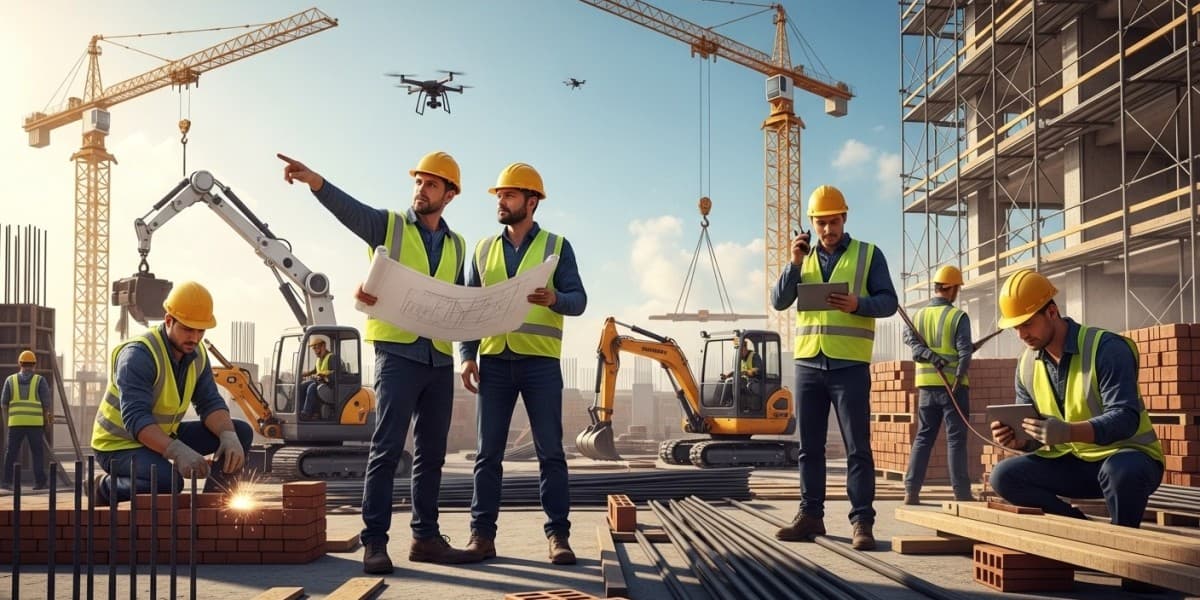
<p><span style="font-weight: 400;">Among the things that U.S. contractors are doing to tackle the labor scarcity are training their people, using technology, raising salaries and work culture, employing prefabrication, as well as planning labor more strategically to ensure their level of productivity is sustained even though the workforce is shrinking.</span></p><p><span style="font-weight: 400;">Most companies nowadays find themselves in a position where they must rethink the way they operate, plan, and hire. It has become necessary to review the entire planning process from its earliest stages, ensuring that decisions are made with long-term impacts in mind. Professionals such as </span><a href="https://1800estimating.com/"><strong>construction cost estimator</strong></a><span style="font-weight: 400;"> are now involved early on to help forecast labor on project budgets and schedules, along with materials and quantities. Through accurate estimating services and detailed quantity takeoffs, companies can achieve better cost control and more reliable project planning.</span></p><p><span style="font-weight: 400;">Instead of merely depending on a solitary solution, U.S. contractors are reacting with a mixture of strategies that include workforce development, technology adoption, and smart methods of project execution. In the following parts, we shall see in detail how these approaches are being used throughout the American construction industry.</span></p><h2><strong>Comprehending The Labor Shortage In Construction In The U.S.</strong></h2><h3><strong>Workforce Aging And Retirements</strong></h3><p><span style="font-weight: 400;">Among the major reasons behind labor shortages in the U.S. construction sector is the aging of the workforce. A significant portion of skilled tradespeople are nearing the age of retirement, and there are many workers leaving the industry even faster than there are new workers coming in. Long ago, construction used to be a stable and respectable career, but that image has faded over time.</span></p><p><span style="font-weight: 400;">When experienced workers retire, the contractors lose not only the additional hands but also the savvy on location. That void has resulted in mentorship and training becoming more valuable than ever, especially for complicated commercial and infrastructure projects.</span></p><h3><strong>Increasing Demand For Construction Projects</strong></h3><p><span style="font-weight: 400;">Meanwhile, the demand for construction in the U.S. has kept on growing. With federal infrastructure funding, a shortage of houses, projects aimed at producing energy from renewable resources, and commercial development, the volume of work has been increasing throughout the country. This lever that pulls demand and labor availability apart is putting contractors under pressure to give more with less, often within very short time limits.</span></p><h2><strong>Investing In Workforce Training And Education</strong></h2><h3><strong>Apprenticeship Programs And Skill Development</strong></h3><p><span style="font-weight: 400;">Through apprenticeship programs, many U.S. contractors are rebuilding the talent pipeline as a response to labor shortages. These programs permit workers to be paid while acquiring knowledge, thus they gain hands-on experience under skilled instructors. Apprenticeships work very well in trades like electrical, plumbing, HVAC, and carpentry.</span></p><p><span style="font-weight: 400;">Employers who provide training usually experience lower employee turnover because workers recognize that their employer is interested in their professional development. Such a workforce gradually becomes more loyal and highly skilled.</span></p><h3><strong>Collaborations With Educational Institutions</strong></h3><p><span style="font-weight: 400;">One more potent method is partnering with community colleges, vocational schools, and union training centers. Educators and contractors become partners to help students in the curriculum, making sure that the content is matched with the needs at the construction site. This guarantees that graduates are familiar with the latest construction methods, tools, and safety standards and prepared for work immediately.</span></p><h2><strong>Technology Adoption To Minimize Dependency On Labor</strong></h2><h3><strong>Mechanization And Digital Tools</strong></h3><p><span style="font-weight: 400;">Technology advances the role of U.S. contractors in solving labor shortage problems. Automated tools, for example, robotic layout systems and automated machinery, assist in lessening the requirement of manual labor for the completion of monotonous tasks. On the other hand, technology and workers' skills are not substitutes, as smaller crews can do more work efficiently thanks to the technology.</span></p><p><span style="font-weight: 400;">Construction software also enhances team coordination, lowers the number of errors, and facilitates communication. More efficient use of planning time results in less wasted labor hours and the achievement of desirable project outcomes.</span></p><h3><strong>Labor Scheduling Through Data Analytics</strong></h3><p><span style="font-weight: 400;">Businesses can now predict their labor requirements much more accurately with the help of advanced software platforms. Through the analysis of past projects' data and the requirements of projects currently underway, workers can be directed to the places where their skills are most needed. In fact, such planning is extremely helpful in U.S. mega projects where a shortage of workers can entail a domino effect of increased delays.</span></p><h2><strong>Prefabrication And Modular Construction</strong></h2><h3><strong>Off-Site Construction Benefits</strong></h3><p><span style="font-weight: 400;">Prefabrication and modular construction methods in the U.S. are gaining more and more popularity as labor limitations solutions. The number of skilled workers required on the site can be minimized by transferring a proportion of the work to factory-based controlled environments.</span></p><p><span style="font-weight: 400;">Factory-designed products also offer higher productivity and quality control since components are constructed in a stable environment. This approach reduces the risk of rework and weather-related delays.</span></p><h3><strong>Effect On Project Timelines And Costs</strong></h3><p><span style="font-weight: 400;">By modular construction, projects are finished in a shorter time frame, which is a great help for the contractor in balancing increased labor costs. Even though considerable coordination is necessary in the initial planning stage, the overall on-site labor requirement is significantly lower.</span></p><p><strong>Table: Traditional vs. Modular Construction (Labor Impact)</strong></p><table><tbody><tr><td><p><strong>Factor</strong></p></td><td><p><strong>Traditional Construction</strong></p></td><td><p><strong>Modular Construction</strong></p></td></tr><tr><td><p><span style="font-weight: 400;">On-site labor demand</span></p></td><td><p><span style="font-weight: 400;">High</span></p></td><td><p><span style="font-weight: 400;">Lower</span></p></td></tr><tr><td><p><span style="font-weight: 400;">Schedule predictability</span></p></td><td><p><span style="font-weight: 400;">Moderate</span></p></td><td><p><span style="font-weight: 400;">High</span></p></td></tr><tr><td><p><span style="font-weight: 400;">Weather dependency</span></p></td><td><p><span style="font-weight: 400;">Significant</span></p></td><td><p><span style="font-weight: 400;">Minimal</span></p></td></tr><tr><td><p><span style="font-weight: 400;">Skill concentration</span></p></td><td><p><span style="font-weight: 400;">Spread across the site</span></p></td><td><p><span style="font-weight: 400;">Centralized in the factory</span></p></td></tr></tbody></table><p> </p><h2><strong>Improving Recruitment And Talent Attraction</strong></h2><h3><strong>Rebranding Construction Careers</strong></h3><p><span style="font-weight: 400;">US contractors are paying more attention to changing how people view construction careers these days. They believe that by showing the career growth, earning potential, and job stability, they can attract the young generation who would have preferred working in other industries.</span></p><p><span style="font-weight: 400;">Digital outreach via social media and job platforms has become essential in attracting and engaging talent. Some companies display actual employee testimonies to illustrate that construction is not just about the jobs at hand, but there are long-term opportunities as well.</span></p><h3><strong>Expanding The Talent Pool</strong></h3><p><span style="font-weight: 400;">Contractors are expanding their reach in the recruitment process to also include minority groups. Besides solving the problem of labor shortage, which is the major motivation, work diversity will also bring about better performances and innovation on job sites.</span></p><h2><strong>Retention Strategies For Skilled Workers</strong></h2><h3><strong>Competitive Compensation And Benefits</strong></h3><p><span style="font-weight: 400;">In the U.S construction market, it is important to keep your existing workforce just as much as you acquire new ones. To entice and keep their skilled workers, contractors come up with offers of higher wages, health benefits, retirement plans, and paid training. Labor being very scarce and the competition for it very keen, a little increment in the compensation packs a lot of punch.</span></p><h3><strong>Career Growth And Respect On The Job Site</strong></h3><p><span style="font-weight: 400;">Employees tend to stay with a company that offers them a definite progression in their career as well as a working environment that is friendly and respects them. Most of the time, contractors who send their supervisors for leadership training get an uplift in their workers’ attitude and a significant drop in worker turnover.</span></p><h2><strong>Enhancing Job Site Safety And Work Conditions</strong></h2><h3><strong>Safety As A Retention Tool</strong></h3><p><span style="font-weight: 400;">One of the chief problems facing workers in the construction industry is their safety at work. The good news is that our contractors have taken up the challenge and have responded very strongly by implementing and strengthening safety programs. The use of well-maintained machines, conducting issuance of personal protective gear, constant safety training sessions, and observing OSHA standards all contribute to the reduction in the rate of injuries while building the workers’ confidence.</span></p><p><span style="font-weight: 400;">It goes without saying that when the site is safer, there will be fewer interruptions and hence higher productivity, which means a lot, especially when your labor resources are limited.</span></p><h2><strong>Flexible Labor Solutions And Strategic Planning</strong></h2><h3><strong>Subcontracting And Temporary Labor</strong></h3><p><span style="font-weight: 400;">It is one of the ways contractors use to deal with the fluctuation of workload, that they hire subcontractors and temporary labor. Besides that, it also gives the contractors an edge over their competitors by being more flexible in their workforce; thus, they can have an increased workforce when the need arises and can avoid being overstaffed.</span></p><h3><strong>Smarter Scheduling And Forecasting</strong></h3><p><span style="font-weight: 400;">Good scheduling goes a long way in ensuring that all the workers on the ground are well utilized. By engaging in early planning and forecasting, contractors are able to anticipate their labor needs and hence eliminate last-minute emergencies, which in most cases are characterized by shortage, project delays, and cost overruns.</span></p><p><strong>Table: Common Labor Strategies Used by U.S. Contractors</strong></p><table><tbody><tr><td><p><strong>Strategy</strong></p></td><td><p><strong>Primary Benefit</strong></p></td></tr><tr><td><p><span style="font-weight: 400;">Apprenticeships</span></p></td><td><p><span style="font-weight: 400;">Long-term workforce development</span></p></td></tr><tr><td><p><span style="font-weight: 400;">Prefabrication</span></p></td><td><p><span style="font-weight: 400;">Reduced on-site labor</span></p></td></tr><tr><td><p><span style="font-weight: 400;">Technology adoption</span></p></td><td><p><span style="font-weight: 400;">Higher productivity</span></p></td></tr><tr><td><p><span style="font-weight: 400;">Competitive wages</span></p></td><td><p><span style="font-weight: 400;">Improved retention</span></p></td></tr><tr><td><p><span style="font-weight: 400;">Flexible staffing</span></p></td><td><p><span style="font-weight: 400;">Adaptability to demand</span></p></td></tr></tbody></table><p> </p><h2><strong>Conclusion</strong></h2><p><span style="font-weight: 400;">Labor shortages are no longer a short-lived problem in the U.S. construction industry but rather a long-term state of affairs. Contractors who respond to the situation by upskilling their workforce, utilizing advanced technology, and making well-thought-out plans will have more chances to win. If the industry collectively considers labor as an indispensable asset that needs to be nurtured and safeguarded, it can still work towards fulfilling America’s increasing construction demands in spite of the continuous workforce issues.</span></p><h2><strong>FAQs</strong></h2><h3><strong>1. What Has Caused The Construction Labor Shortage In The U.S. To Become So Severe?</strong></h3><p><span style="font-weight: 400;">The three significant factors are an aging workforce, a rise in the retirement of skilled workers, and a smaller number of young people entering the trades.</span></p><h3><strong>2. Is It Possible For Technology To Substitute Construction Workers?</strong></h3><p><span style="font-weight: 400;">It is understood that technology helps the workers by making them more productive, but it cannot totally replace skilled labor.</span></p><h3><strong>3. Are Apprenticeship Programs In The U.S. A Good Idea?</strong></h3><p><span style="font-weight: 400;">Yes, apprenticeships are probably the best way to create a skilled and loyal workforce.</span></p><h3><strong>4. In What Way Does Prefabrication Address The Problem Of Labor Shortages?</strong></h3><p><span style="font-weight: 400;">Moving work to factories, it lowers the amount of labor needed on-site and allows for quicker project delivery.</span></p><h3><strong>5. What Is The Best Way To Deal With Labor Shortages Over The Long Term?</strong></h3><p><span style="font-weight: 400;">The right mix of training, retention, technology usage, and planning a project at an early stage gives perfect results.</span></p>