Operation Sindoor Anniversary: Breaking News in India Today — One Year That Changed Everything
May 22
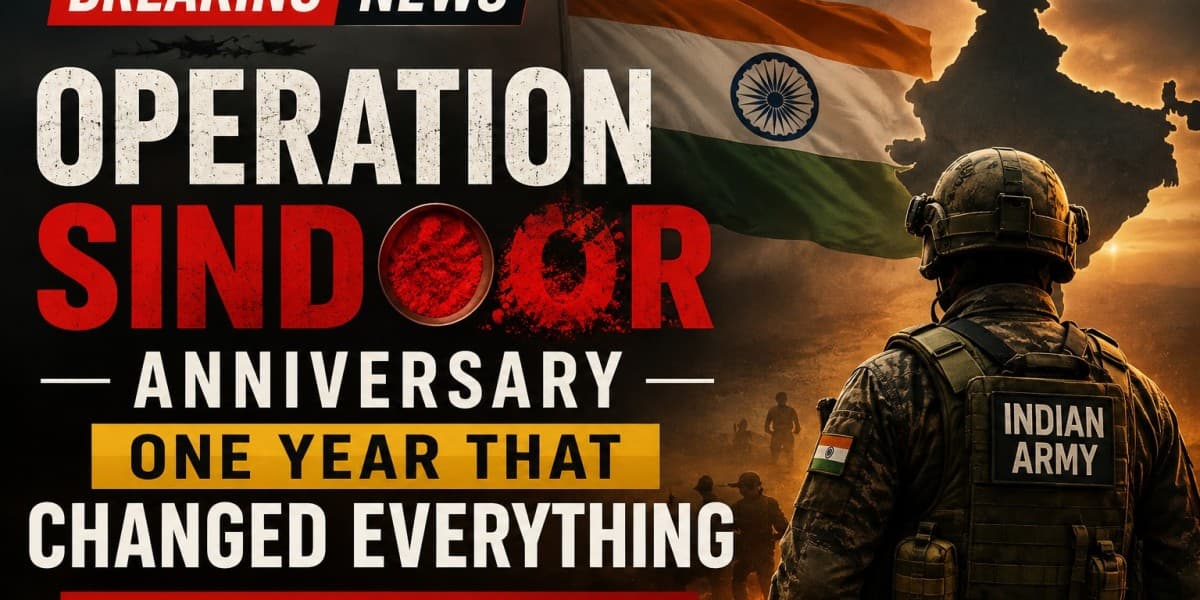
<p><span style="font-weight: 400;">It happened at 1:05 in the morning.</span></p><p><span style="font-weight: 400;">No warning. No press conference. Just the quiet roar of Indian Air Force Rafale jets cutting through the night sky — and nine terror camps in Pakistan turning to ash in exactly 22 minutes.</span></p><p><span style="font-weight: 400;">That was May 7, 2025. And this week, as the </span><a href="https://www.rajexpress.com/news/national-news/18"><strong>latest national news update in India</strong></a><span style="font-weight: 400;"> confirms, we mark one full year since Operation Sindoor changed the rules of South Asian security forever.</span></p><h3><strong>What Happened — And Why It Still Matters</strong></h3><p><span style="font-weight: 400;">If you're catching up on</span><strong> breaking news in India today</strong><span style="font-weight: 400;">, here's the short version.</span></p><p><span style="font-weight: 400;">On April 22, 2025, 26 civilians — mostly Hindu tourists on a peaceful vacation — were shot dead by Pakistan-backed terrorists at the Baisaran meadow in Pahalgam, Kashmir. They were identified by their religion before being killed. The cruelty of it shocked the nation.</span></p><p><span style="font-weight: 400;">India's reply came fifteen days later.</span></p><p><span style="font-weight: 400;">Operation Sindoor struck the headquarters of Jaish-e-Mohammed in Bahawalpur and Lashkar-e-Taiba's base in Muridke — places deep inside Pakistan that India had never targeted before. The operation involved the Army, Air Force, and Navy working together. BrahMos missiles, loitering munitions, SCALP cruise missiles, precision bombs. Indigenous Indian systems performed alongside imported hardware in real combat conditions for the first time.</span></p><p><span style="font-weight: 400;">Pakistan retaliated. There were drone attacks and border skirmishes. But by May 10, it was over. Pakistan's military asked for the ceasefire, according to India's own former DGMO. Nobody asked India to stop. India stopped when it chose to.</span></p><h3><strong>How India Changed After Sindoor</strong></h3><p><span style="font-weight: 400;">For decades, India practiced what analysts called "strategic restraint." Attack after attack — Pulwama, Uri, Mumbai — was met with diplomatic protests and limited action. Pakistan's nuclear weapons always seemed to freeze India in place.</span></p><p><span style="font-weight: 400;">That calculus ended on May 7, 2025.</span></p><p><span style="font-weight: 400;">Speaking ahead of this anniversary, former Lieutenant General Dushyant Singh said it directly: "We moved from strategic restraint to strategic proactiveness. We called the nuclear bluff of the adversary."</span></p><p><span style="font-weight: 400;">India now spends $92.1 billion annually on defence — the fifth highest in the world, a jump of nearly 9% following Sindoor. Drone procurement, counter-drone systems, air defence upgrades — all of it accelerated because of what one operation revealed about both India's capabilities and its gaps.</span></p><p><span style="font-weight: 400;">The message to the region: the old rules are gone.</span></p><h3><strong>The Complicated Geopolitical Picture</strong></h3><p><span style="font-weight: 400;">This is where </span><strong>breaking news in India today</strong><span style="font-weight: 400;"> live gets genuinely uncomfortable.</span></p><p><span style="font-weight: 400;">Pakistan, despite being exposed as a sponsor of terror, has managed a remarkable diplomatic turnaround in the past year. By giving Donald Trump full credit for the ceasefire — which India firmly refused to do — Islamabad won Washington's warmth. Pakistan then played mediator in Iran-US nuclear talks in April 2026. Trump publicly called Pakistan's army chief his "favourite Field Marshal."</span></p><p><span style="font-weight: 400;">India's decision to insist on a bilateral ceasefire narrative — though accurate — appears to have cooled the once-warm Modi-Trump relationship. And despite India's best efforts, not one major G20 nation formally condemned Pakistan by name after Pahalgam.</span></p><p><span style="font-weight: 400;">As </span><a href="https://www.rajexpress.com/news/international-news/21"><strong>international news in Hindi</strong></a><span style="font-weight: 400;"> and English both show, military success and diplomatic success are two very different things. India won the battle convincingly. The geopolitical contest is still ongoing.</span></p><h3><strong>One Year On — The Real Legacy</strong></h3><p><span style="font-weight: 400;">Beyond the doctrine, beyond the deterrence, beyond the strategic language — 26 men never returned from Pahalgam. That grief is what Operation Sindoor was really about.</span></p><p><span style="font-weight: 400;">India showed it could act. The harder question now is whether it can convert that action into lasting peace — not just for governments, but for the families still waiting for justice.</span></p><p><span style="font-weight: 400;">That is the </span><strong>breaking news in India today </strong><span style="font-weight: 400;">that no headline can fully capture.</span></p><p><em><span style="font-weight: 400;">Share this article if you believe ordinary people deserve clear, honest news — not just noise.</span></em></p>